The journey through heartbreak isn’t easy, but with the right method, you can emerge stronger and wiser on the other side.

Have you ever felt like your heart was literally breaking? That crushing weight in your chest, the random moments when tears ambush you, the sleepless nights wondering where it all went wrong?
I’ve been there. We’ve all been there.
And if you’re reading this right now, chances are you’re in that dark place too. First, I want you to know something important: you are not alone.
When You’re Too Deep In The Pain To See The Light
When I was going through my own breakup, I heard this phrase over and over:
“This too shall pass.”
Maybe you’ve heard similar advice: “Hang in there.” “Time heals.” “Life will feel okay again.”
And now that I’m on the other side of that heartbreak, I can tell you—it’s true. Time really is the best medicine. It softens pain. It mends what feels unfixable.
That’s a promise I can make to you.
But when you’re deep in it? When the person you loved is gone, and the future feels hollow— None of that matters.
The pain is brutal. It hits you in waves. You wake up thinking things might feel normal again— Then it slams into your chest all over.
And most of the advice people give you? It’s vague. It’s abstract. It’s not what you need when you’re desperate for something—anything—that actually works.
So today, I want to walk with you through this time. Not with clichés, but with the right method. Actionable, psychology-based steps to help you move through heartbreak faster.
***Lovomoon clients—this is for you too.
While you’re following the text guidance and get-ex-back action plan, these 7 practical steps can help you stay emotionally grounded. So read them carefully and apply them.
Why Heartbreak Hurts So Much (It’s Not Just In Your Head)
Before we dive into the healing steps, let’s understand why breakups cause such intense pain.
Research shows that romantic rejection activates the same brain regions as physical pain. That’s right—your brain processes heartbreak similar to how it processes being physically hurt. Brain scans reveal that the regions that light up when you experience physical pain also activate when you’re rejected romantically.
This explains why it literally feels like your heart is breaking. Your body is experiencing real, physiological distress.
Studies have also found that after a breakup, your brain goes through withdrawal-like symptoms similar to what happens when quitting addictive substances. Your brain was accustomed to the dopamine hits from your relationship—the good morning texts, the physical touch, the emotional connection—and now it’s desperately craving those feel-good chemicals.
Understanding this biological basis doesn’t minimize your emotional pain. Rather, it validates it. What you’re feeling is real, and there are concrete reasons why it hurts so much.
Now, let’s talk about how to heal.
7 Psychological Steps to Heal Your Broken Heart
1. Write Down What Wasn’t Right—for You
Let’s be blunt: Your brain is not your ally right now.
In the aftermath of a breakup, your memory plays tricks on you. It skips over the tension, the arguments, the nights you cried yourself to sleep. Instead, it loops the highlight reel—the vacations, the kisses, the “I love you”s.
You’re not broken. That’s human instinct.
Neurologically, we’re wired to chase comfort and avoid pain. And right now, your brain is doing everything it can to pull you back toward what felt familiar—even if that familiarity came with stress, imbalance, or emotional exhaustion.
But missing someone doesn’t mean they were right for you. It just means your brain hates uncertainty and would rather cling to the known pain than face the unknown future.
So, how do you fight back?
You arm yourself with logic.
Sit down—yes, physically sit down—and write a list. Not a journal. Not a rant. A list of truth.
This list is your emotional blueprint. Bullet-point everything that didn’t sit right in the relationship:
- What behaviors led to repeated arguments?
- What personal values clashed, no matter how much you tried to ignore them?
- What patterns made you feel small, anxious, or unseen?
- What unmet needs became chronic sources of disappointment?
You’re not writing this to trash your ex or punish yourself. You’re writing this to bring clarity to a mind clouded by grief and longing.
This list isn’t about hate—it’s about misalignment.
We all have blind spots when we fall in love. We excuse red flags. We suppress our gut instincts. But when the relationship ends, we have a rare chance to see things as they really were.
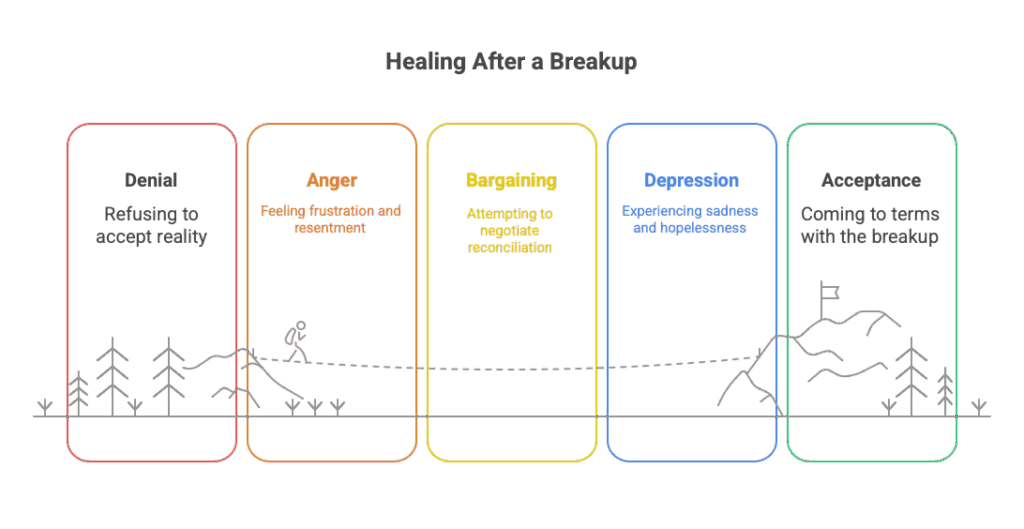
Psychologically, a breakup runs through five stages: denial, anger, bargaining, depression, and acceptance. This exercise pulls you out of denial and puts you closer to truth.
People who do this simple task—who actually take the time to look back with honesty—don’t just move on faster. They date better next time. They ask smarter questions. They recognize patterns before they repeat.
Because here’s the truth:
There is a massive difference between someone who knows what they want in love—and someone who only knows how to miss what they lost.
This list becomes your dating compass. It helps you filter, set boundaries, and recognize when someone is genuinely a match—not just someone who fills a void.
2. Keep Your Clarity Visible
Creating your relationship reality document is step one. Using it effectively is step two.
The Solution: Strategic Placement
- Save it as your phone’s lock screen
- Keep a printed copy in your wallet
- Put it on a post-it note on your bathroom mirror
- Create a folder in your phone where you can quickly access it
The key is visibility. When the longing hits—and it will—having immediate access to your clarity document can interrupt the romanticizing cycle before it spirals.
This practice is based on cognitive behavioral techniques that help break patterns of idealization by introducing contradictory evidence at crucial moments. Your brain craves the comfort of selective memories, but your document provides the reality check needed to maintain emotional boundaries.
3. Don’t Suppress the Pain—Observe It
Society tells us to “stay strong.” Put on a brave face. Keep busy. Distract yourself.
But real strength isn’t about pretending to be okay. It’s about staying conscious in the middle of the storm.
Suppressing your emotions doesn’t make them go away. It pushes them deeper—until they leak out in other ways. Irritability. Sleeplessness. Anxiety. Emotional numbness. Sometimes, physical symptoms.
In The Happiness Hypothesis, social psychologist Jonathan Haidt explains this with a powerful metaphor:
Your mind is like a rider on top of an elephant. The rider is your rational mind. The elephant is your emotions and subconscious.
The rider can try to steer—but only if the elephant agrees to go. If the elephant panics, there’s no reasoning with it.
So what does that mean for you?
It means that trying to suppress your pain—pretending you’re not hurt, avoiding tears, acting “fine” on Instagram—won’t help. You can’t out-think heartbreak. You have to feel it, observe it, and let it move through you.
That doesn’t mean wallowing or spiraling. It means allowing.
Let yourself cry without judging it. Talk to someone who won’t try to fix you—just listen. Scream into your pillow. Take a long walk and let the grief come in waves.
This is not weakness. This is the only path through.
Because when you acknowledge your emotions without running from them, you take back control. You stop being the hostage of your pain—and start becoming the witness.
And that small shift changes everything.
4. Rebuild Your Support System
After a breakup, many people isolate themselves. This is precisely when you need connection most.
A long-term relationship often becomes your primary source of validation, comfort, and belonging. When that relationship ends, you don’t just lose a partner—you lose a fundamental source of emotional security.
The Solution: Strategic Connection
Be intentional about rebuilding your support network:
- Identify 3-5 people who make you feel valued, understood, and accepted
- Schedule regular check-ins (coffee dates, phone calls, walks)
- Be honest about what you need: “I’m really struggling today and could use some company”
- Accept help when it’s offered
Research consistently shows that social support is one of the strongest predictors of resilience during crisis periods. Your friends and family serve as external reminders of your worth when your internal voice is at its most critical.
Remember: Accepting support isn’t weakness—it’s wisdom. As humans, we’re wired for connection, and tapping into your support network activates your brain’s natural healing mechanisms.
5. Move Your Body to Heal Your Heart
When heartbreak hits, the last thing you probably want to do is exercise. The effort seems impossible when even getting out of bed feels like climbing Everest.
Yet this is precisely when physical movement becomes most crucial. Exercise isn’t just about physical health—it’s powerful emotional medicine.
The Solution: Start Small, Stay Consistent
You don’t need to run marathons to get the benefits:
- Begin with just 15-20 minutes of movement daily
- Choose something accessible: walking, jogging, dancing in your living room
- Focus on consistency rather than intensity
- Use movement as emotional release, not punishment
Here’s the science: Exercise releases endorphins, serotonin, and dopamine—the exact neurotransmitters depleted during heartbreak. It also reduces cortisol, the stress hormone that’s likely flooding your system right now.
A study published in the Harvard Health found that regular aerobic exercise was as effective as antidepressant medication for mild to moderate depression in some individuals. Your body literally has built-in pharmacy for heartbreak—you just need to activate it.
6. Implement a Digital Detox from Your Ex
In the digital age, breakups are infinitely harder. Your ex is just a tap away—their social media updates, photos, and messages create a constant connection that makes emotional detachment nearly impossible.
Each digital check-in restarts the attachment cycle in your brain, triggering the release of chemicals that reinforce your emotional bond. It’s like repeatedly reopening a wound just as it starts to heal.
The Solution: Digital Boundaries
- Block or mute on all social platforms
- Delete conversation threads
- Remove photos from your phone (back them up somewhere inaccessible if you’re not ready to delete permanently)
- Ask mutual friends not to update you on their life
Dr. Tara Marshall’s research found that continued online contact was associated with greater distress, negative feelings, and longing for the ex-partner, as well as lower personal growth.
This step often meets the most resistance. You might worry: “What if they reach out?” or “What if I miss important updates?” The reality is that any truly important communication can happen through mutual friends if necessary. Your healing is the priority now.
7. Learn—Don’t Just “Get Over It”
The final step is perhaps the most powerful—turning your heartbreak into a catalyst for personal growth.
Because without reflection, pain is just pain. But with reflection, pain becomes a teacher.
Too many people try to “just move on” without truly understanding what went wrong. They rush into the next relationship, desperate to feel wanted again… And they end up repeating the exact same mistakes—just with a different person.
I often tell my clients: “Don’t panic just because one bus left—another one is already on its way.“
Just because one love has ended doesn’t mean love itself has left your life. Another love will come. The story isn’t over.
But don’t jump on the next “bus” just because you’re lonely. Getting into a new relationship just to relieve pain is like boarding a bus without knowing where it’s headed. You might be moving—but in the wrong direction. And chances are, you’ll end up right back in the same unhealthy cycle.
Instead, use this heartbreak to transform.
Ask yourself honestly:
- What unhealthy patterns do I keep repeating in relationships?
- What emotional needs was I trying to fulfill through this relationship?
- What red flags did I ignore, and why?
- What boundaries do I need to set in my next relationship?
Right now, you may feel shattered—but paradoxically, your focus is at its sharpest. When we’re in emotional pain, the brain becomes hyper-attuned—desperately searching for meaning, patterns, and answers. This uncomfortable state is actually the best moment to reflect, learn, and change.
Don’t waste it.
At Lovomoon, you’ll find articles that break down:
- Value Frame – How the Value Frame Reignites Attraction After a Breakup
- The Principle of Changing Someone’s Heart – How to Make Your Ex Miss You
- After a Breakup What To Do – 6 Mistakes To Avoid
Take this time not just to reflect—but to learn, absorb it fully, and put it into action.
Because once you understand the principles behind attraction and men and women’s psychology, you won’t just avoid the same pain next time— you’ll become someone who naturally attracts healthy, secure, and lasting love.
And when that day comes… There will be no more unwanted breakups. Because you’ll finally be in a relationship that matches who you’ve grown to become.

Final Thoughts: Your Future Self Is Waiting
As you work through these seven steps, I want you to imagine something:
Picture yourself six months from now.
You wake up one morning and realize—you haven’t thought about your ex in days. Your chest feels lighter. Your smile comes more easily. The future excites you again, rather than scaring you.
That version of you exists. They’re waiting on the other side of this healing process.
I know this because I’ve been where you are. The pain you feel right now is excruciating—but it is not permanent.
Your heart isn’t just breaking—it’s breaking open. And sometimes, that’s exactly what needs to happen before something better can enter.
The person you become through this journey will be stronger, wiser, and more capable of genuine love than you’ve ever been before.
Not because heartbreak is some magical gift—it’s not. But because you chose to use this pain as a catalyst rather than letting it define you.
And that choice matters—whether you’re trying to move on or desperately hoping to get your ex back.
If you use this time to understand the core principles of attraction, how to change someone’s heart, and the psychology of men and women, this won’t just be heartbreak—it will be a transformation.
You will heal. You will love again. And when you do, it will be with a depth and wisdom that makes everything you’ve gone through worth it.
What step resonated with you most? Which one will you try first? Share your thoughts in the comments—your experience might be exactly what someone else needs to hear right now.